Aerial Measurement

Accurate roof measurements are an essential part of every roofing project. Whether you are preparing a roofing estimate, ordering materials, planning a replacement, or reviewing an insurance claim, having accurate measurements can save time, reduce errors, and improve project planning.

A roof measurement report provides detailed information about a property’s roof using aerial imagery and professional measurement software. Instead of spending hours measuring a roof manually, roofing contractors can use a detailed report to quickly understand the roof’s size, shape, dimensions, and key components.

What Is a Roof Measurement Report?

A roof measurement report is a detailed document that provides measurements and calculations for a property’s roof.

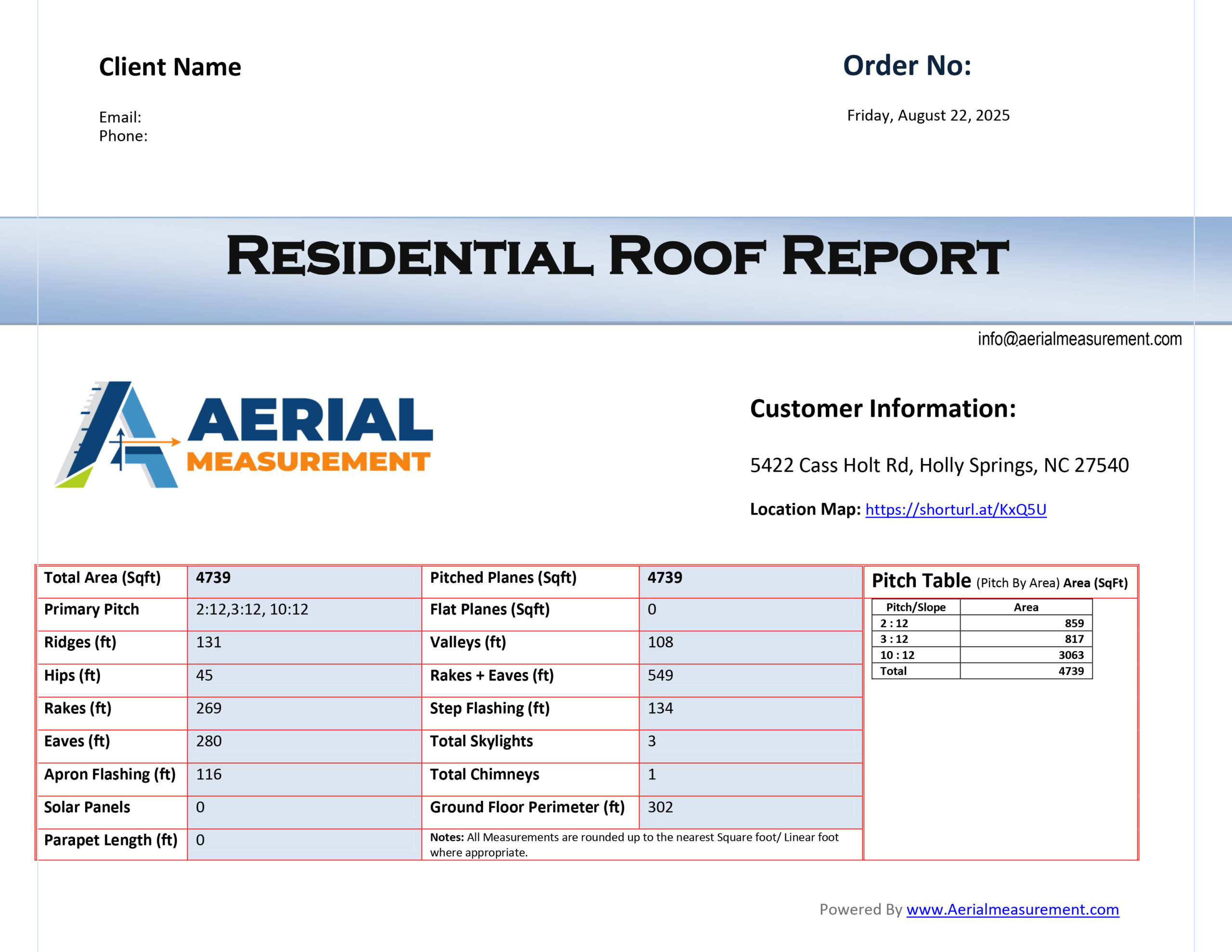
Depending on the report provider, it can include:

  • Total roof area
  • Roof squares
  • Roof pitch
  • Ridge measurements
  • Hip measurements
  • Valley measurements
  • Eave measurements
  • Rake measurements
  • Roof sections and facets
  • Roof diagrams
  • Waste factor calculations
  • Roof images
  • Material quantities

These measurements can then be used by roofing contractors to prepare estimates and plan their projects more efficiently.

How Does Aerial Roof Measurement Work?

Aerial roof measurements are created using high-quality aerial imagery and specialized measurement software.

The process generally includes:

  1. Property identification – The correct property is located using the project address.
  2. Aerial imagery review – High-quality aerial images are reviewed to identify the roof structure.
  3. Roof tracing – Individual roof sections are traced and measured.
  4. Pitch identification – Roof pitches are determined where imagery allows.
  5. Measurements and calculations – Roof areas and linear measurements are calculated.
  6. Quality review – The measurements and roof layout are reviewed for accuracy.
  7. Report generation – The final roof measurement report is prepared and delivered.

This process allows contractors to receive important roof information without initially sending someone to the property for manual measurements.

What Information Is Included in a Roof Measurement Report?

A professional roof measurement report can contain several important sections.

Roof Summary

The roof summary provides an overview of the property, including the total roof area and other important measurements.

Roof Area by Pitch

Different sections of a roof can have different pitches. A detailed report can show the area associated with each pitch.

Roof Squares

Roofing contractors commonly use squares when discussing roof quantities.

One roofing square equals 100 square feet of roof area.

For example, a roof measuring 2,500 square feet would contain approximately 25 roofing squares before accounting for waste.

Roof Dimensions

A report can include important linear measurements such as:

  • Ridges
  • Hips
  • Valleys
  • Eaves
  • Rakes

These measurements can be useful when preparing material estimates.

Roof Diagrams

Roof diagrams provide a visual representation of the roof layout. They make it easier to understand the different roof sections and their dimensions.

Pitch Information

Roof pitch describes how steep a roof is. Knowing the pitch is important for estimating roof area and planning installation.

Why Are Roof Measurement Reports Important for Roofing Contractors?

Accurate measurements can make the estimating process much easier.

Save Time

Instead of spending hours manually measuring a property, contractors can receive measurements before starting the project.

Reduce Measurement Errors

Manual measurements can be affected by difficult access, complex roof designs, weather conditions, and human error. Professional aerial measurements provide another way to obtain detailed roof information.

Prepare Estimates Faster

When roof dimensions are already available, contractors can use them to prepare estimates more efficiently.

Improve Material Planning

Roof measurements can help contractors determine approximate material quantities for roofing projects.

Handle Complex Roofs

Large or complicated roofs can be difficult to measure manually. A detailed aerial report can help break the roof into individual sections and provide a clearer understanding of the overall structure.

Aerial Roof Measurements vs. Manual Measurements

Traditional roof measurements often require someone to visit the property and physically measure the roof.

Aerial measurement allows the roof to be analyzed remotely using aerial imagery.

Both methods can be useful, but aerial measurements offer several advantages for initial estimating and project planning:

Aerial MeasurementManual Measurement
Can be completed remotelyRequires a site visit
Saves travel timeRequires travel
Useful for initial estimatesUseful for on-site verification
Provides aerial roof imageryRelies on physical measurements
Can help with difficult-to-access roofsAccess may be limited

For many contractors, aerial measurement can be an efficient first step before a project begins.

Can Roof Measurement Reports Be Used for Material Estimates?

Yes. Roof measurements can provide valuable information for estimating roofing materials.

Depending on the project and report, measurements may help determine quantities for materials such as:

  • Shingles
  • Underlayment
  • Drip edge
  • Ridge materials
  • Valley materials
  • Flashing
  • Other roofing components

However, material requirements can vary depending on the roofing system, installation method, manufacturer specifications, and project conditions. Contractors should always verify final material requirements before ordering.

How Accurate Are Aerial Roof Measurements?

The accuracy of an aerial roof measurement depends on several factors, including image quality, visibility, roof complexity, available imagery, and the measurement process.

High-quality aerial imagery and professional measurement software can provide detailed measurements, but aerial reports should not automatically be treated as a replacement for every type of on-site inspection.

For unusual structures, hidden roof sections, poor imagery, or areas that cannot be clearly identified, additional verification may be necessary.

When Should You Use a Roof Measurement Report?

Roof measurement reports can be useful for:

  • Roofing estimates
  • Roof replacement projects
  • Insurance-related estimating
  • Material planning
  • Contractor proposals
  • Pre-construction planning
  • Remote estimating
  • Large-volume roofing projects

They are particularly useful for contractors who need to estimate multiple properties without visiting every location first.

Final Thoughts

A professional roof measurement report can help roofing contractors save time, improve estimating efficiency, and better understand a property’s roof before starting a project.

With detailed measurements for roof areas, pitches, ridges, hips, valleys, eaves, rakes, and other roof components, contractors can have the information they need to prepare more informed estimates and plan their work.

At Aerial Measurement, we provide professional roof measurement reports using high-quality aerial imagery and specialized measurement software. Our reports are designed to give roofing contractors clear and useful measurements for estimating and project planning.

Need a professional roof measurement report for your next project? Contact Aerial Measurement today and get your roof measured quickly and accurately.

Leave a Reply

Your email address will not be published. Required fields are marked *