
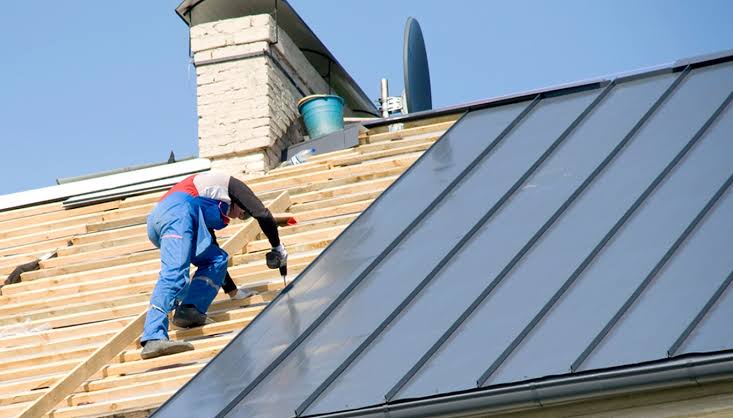
If you are planning a metal roofing installation, the very first and most crucial step is getting your dimensions exactly right. Unlike asphalt shingles, metal panels are rigid, require precise overlaps, and are significantly less forgiving if you make a calculation error. So, how do you measure a roof for metal accurately to avoid wasted materials and blown budgets?
In this comprehensive guide, we will break down the exact steps on how to measure for a metal roof, what tools you need, and the formulas required to ensure a perfect exterior material takeoff.
Why Accuracy Matters When Measuring a Roof for Metal
When measuring a roof for metal, precision is everything. A miscalculation in your roof’s square footage, pitch, or trim lengths can lead to ordering too few panels (causing project delays) or too many panels (eating directly into your profit margins). Knowing exactly how to measure a roof for metal roofing ensures a seamless installation process from start to finish.
Step-by-Step: How Do You Measure a Roof for Metal?
If you are doing this manually, follow these detailed steps.
1. Gather Your Tools
Before you start measuring a roof for metal, ensure you have the right equipment:
A sturdy extension ladder
A 100-foot measuring tape
A pitch gauge (or a smartphone app)
A notepad and pencil
2. Sketch the Roof Profile
The first step in how to measure for a metal roof is drawing a bird’s-eye view sketch of the property. Identify all the different facets (flat areas) of the roof. Mark down every ridge, valley, hip, eave, and rake.
3. Calculate the Area of Each Facet
To figure out how do you measure a roof for metal square footage, treat each facet of the roof as a basic geometric shape (usually a rectangle or a triangle).
For Rectangular Facets: Multiply the length by the width. (e.g., A 20 ft by 30 ft section equals 600 sq. ft.)
For Triangular Facets: Multiply the base by the height, and divide by two. Add the square footage of all facets together to get your total base area.
4. Account for the Roof Pitch
A flat measurement does not account for the steepness of the roof. When learning how to measure for metal roofing, you must apply a pitch multiplier.
Determine the roof’s pitch (e.g., 6/12 or 8/12).
Multiply your total base flat area by the corresponding pitch factor. This gives you the true surface area.
Divide this final number by 100 to find out how many “squares” of metal roofing you need.
5. Measure for Metal Trim and Flashing
Measuring a roof for metal is not just about the large panels. You must measure the linear footage for all your accessories. Carefully measure:
Eaves: For drip edges.
Rakes: For gable trim.
Ridges and Hips: For ridge caps.
Valleys: For valley flashing.
The Problem with Manual Roof Measurements
While understanding how to measure a roof for metal manually is a good skill, it comes with significant drawbacks:
Safety Risks: Climbing steep, slippery roofs is dangerous.
Time-Consuming: Spending hours pulling tape delays your quoting process.
Human Error: A simple mistake in recording a number can ruin an entire exterior material takeoff.
The Smarter Way: Skip the Ladder with Professional Measurement Reports
Why spend hours calculating how to measure for a metal roof when you can get it done for you with pinpoint accuracy?
For contractors and roofing professionals looking to scale their business, save time, and eliminate human error, leveraging modern technology is the ultimate solution. Instead of sending a crew member out with a tape measure, you can order highly accurate aerial roof measurement reports and exterior material takeoffs.
At Aerial Measurement, we provide comprehensive roof, wall, and siding measurement reports designed specifically for commercial and residential exterior contractors. Our detailed reports give you:
Exact square footage and pitch calculations.
Precise linear measurements for all ridges, hips, valleys, rakes, and eaves.
Ready-to-use exterior material takeoffs so you can order your metal panels with 100% confidence.
Stop wondering how do you measure a roof for metal without making mistakes. Protect your profit margins, keep your team safely on the ground, and win more bids with faster, flawless data.