Executive summary: Aerial roof measurement turns a property address into an accurate, bid-ready roof report. It uses aerial and satellite imagery, with no ladder and no site visit. Accuracy is high on clear roofs, and a quick ground check covers the rest.
Aerial roof measurement is a way to measure a roof from its address, using aerial and satellite imagery. You get full measurements without anyone climbing a ladder. That saves time on every job and removes the fall risk. The report shows roof areas, edge lengths, and pitch, ready for a bid. This guide explains what it is and how it works. It also covers how accurate the numbers are, and what the imagery cannot see.
What Is Aerial Roof Measurement?
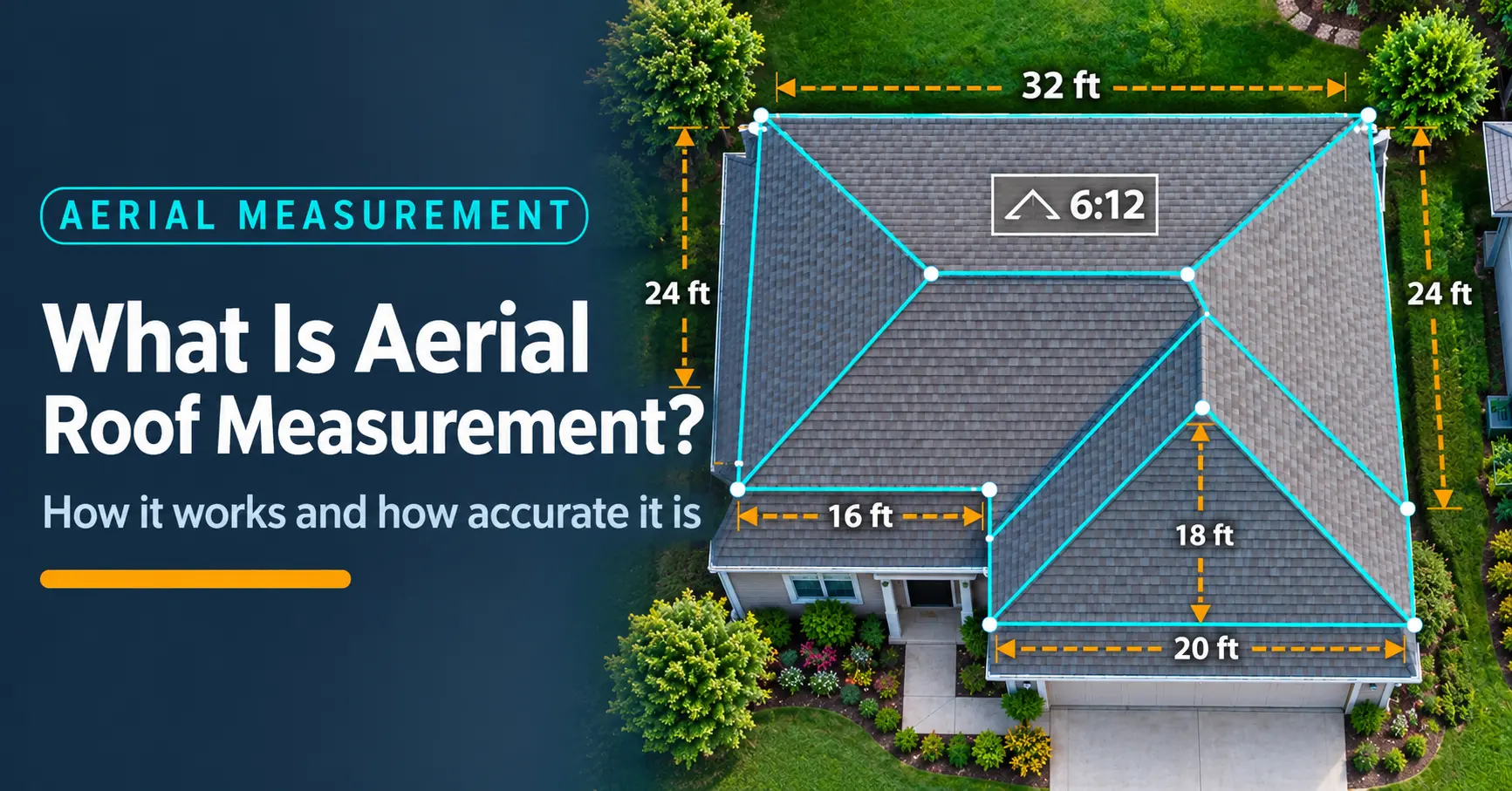
Aerial roof measurement is a digital measurement of a roof, built from overhead imagery of one address. A measurement service pulls recent aerial and satellite photos of that exact roof. Software and a reviewer then measure every roof plane, edge, and ridge. The result is a report with total area, lengths, pitch, and roofing squares. You never visit the property to get it. This is why many people also call it digital roof measurement or aerial view roof measurements.
How Does Aerial Roof Measurement Work?
Aerial roof measurement works the same way on every job, from a simple ranch to a complex roof. The service starts with an address, not a site visit. It pulls overhead imagery, measures the roof in software, and checks the work by hand. Then it delivers a clean report. You can measure a roof from the air in hours this way. Here are the four steps in order.
Step 1: Enter the property address
Every measurement starts with the property address. You type in the address, and nothing else is needed to begin. No one drives to the site, and no appointment is set. This is what makes the service fast and safe. The roof is found using the address and recent imagery. A homeowner or contractor can order it from anywhere. Speed starts right here, at the address bar. The whole job begins with a few typed words.
Step 2: Pull high-resolution aerial and satellite imagery
Next, the service pulls high-resolution imagery of that exact roof. This includes recent aerial photos and satellite imagery of the property. Good imagery is the base of an accurate result. The clearer the view, the better the measurement will be. Overhead images show the roof planes, edges, ridges, and valleys. They also show the rough shape of the pitch. This is a desktop roof measurement, done fully from images. No ladder or site visit is part of it.
Step 3: Measure the roof in software, checked by a person
Now the roof gets measured inside measurement software. The tool maps each plane, edge, ridge, and valley from the imagery. It calculates area, lengths, pitch, and total roofing squares. A trained reviewer then checks the numbers by hand. This human step catches anything the software reads wrong. Two sets of eyes make the report more reliable. The goal is simple, accurate numbers a contractor can bid from. Nothing is sent until that check is done.
Step 4: Receive the report in hours
Finally, the finished report is delivered, often within hours. You get a clean PDF you can read right away. The report shows a labeled roof diagram with every measurement. It lists total area, edge and ridge lengths, pitch, and squares. A contractor can order materials straight from these numbers. There is no waiting days for someone to visit. Fast delivery is a big reason people choose this method. The roof is measured and ready before the day ends.
How Accurate Is Aerial Roof Measurement?
For most standard roofs, aerial roof measurement is accurate enough to order materials and bid with confidence. A person checks every report before it goes out. The numbers come from clear overhead imagery and proven measurement methods. Accuracy is highest on simple, open roofs with a clear view. It can drop on roofs that are hidden, very steep, or unusual. Knowing where each case falls is the key to trusting the result. The sections below break accuracy down by situation.
Where aerial measurement is most accurate
Aerial roof measurement is most accurate on standard, clearly visible roofs. On these roofs, the planes, edges, and ridges show up well in the imagery. Area and total squares come out reliable for ordering shingles. Pitch reads well when the slopes are clean and open. Gable and simple hip roofs are strong cases for it. Most homes fall into this group. For these roofs, the report is ready to bid from. Roof measurement accuracy is high when the view is clear.
Where accuracy is limited
Some roof details are harder to read from above. Deep overhangs and eaves can hide part of the roof edge in imagery. Measuring overhangs and eaves from aerial imagery takes extra care for this reason. Parapet height is also hard to judge from a flat overhead view. Flashing details and small transitions do not always show clearly. Measuring parapet height and flashings from aerial imagery can need a note or a follow-up. On these points, a ground check adds value. Being honest about this builds trust in the result.
How the measurements are verified
Every report goes through a human review before delivery. A reviewer compares the software output against the imagery for mistakes. Steep and complex roofs get extra attention at this stage. Verifying aerial measurements on steep roofs matters, because slope can distort a flat view. The reviewer corrects the pitch and area where the angle needs it. Reliable roof measurement imagery for contractors depends on this careful check. When imagery is unclear, the team flags it instead of guessing. This is how accuracy stays high across different roofs.
Aerial Measurement vs Climbing the Roof
Aerial measurement and climbing the roof both have a place. Each one fits a different part of the job. If you want the manual method, our guide on how to measure a roof covers it. Aerial measurement wins on speed and safety for takeoffs and bids. Climbing still matters when you need to touch the surface. A close look can catch wear, soft spots, and flashing problems. The table below compares the two across the factors that count.
| Factor | Aerial measurement | Climbing the roof |
|---|---|---|
| Time | Report in hours from an address | Travel plus time on the roof per property |
| Safety | No ladder, no fall risk | Ladder and fall risk every visit |
| Consistency | Same method and review on every roof | Varies by who measures and conditions |
| Fine details and condition | Limited for flashing, soft spots, and wear | Strong, you can see and touch the surface |
| Best used for | Fast, safe takeoffs and bids | Final condition checks before work |
Most contractors end up using both together. They measure from imagery to bid fast and safe. Then they climb only to check condition before the work starts. This mix keeps the bid quick and the final check thorough. A full aerial roof measurement service is built around that first fast step. You skip the ladder for the measuring, not for the inspection. Both tools do what each one does best.
What You Get in an Aerial Roof Measurement Report
An aerial roof measurement report puts every number in one place. You get a labeled diagram of the roof from above. It shows each plane with its own area and dimensions. The report lists edge lengths, ridge and hip lengths, and valleys. It gives the pitch and the total roofing squares. All of this arrives from just an address, usually within hours. You can read what goes into a roof measurement report in detail. To get one, order a roof measurement report for any property.
The Bottom Line for Contractors
Aerial roof measurement gives you an accurate roof from just an address. You skip the ladder and the site visit, and still get solid numbers. It works best on clear, standard roofs, where the view is open. On hidden, steep, or unusual roofs, a quick ground check fills the gaps. Knowing where it shines and where to verify is what builds real trust. Used that way, it saves time on every bid. That is the real value of measuring from above.
Frequently Asked Questions
How much does an aerial roof measurement report cost?
Pricing depends on the report type and the roof size. Simple residential reports cost less than large commercial ones. Check the order page for the current price of each report type.
How long does it take to get the report?
Most reports arrive within hours of the order. Same-day delivery is common for standard roofs. Timing can vary with roof size and current demand.
Does aerial roof measurement work for commercial and flat roofs?
Yes, it works for residential, commercial, and flat roofs. Larger or more complex roofs can take a little longer to measure. The report still comes from the address, with no site visit.
Can I use an aerial roof measurement report for an insurance claim?
The report gives clear, documented roof measurements. Many contractors and adjusters use these numbers when they handle claims. Always check your insurer’s own rules for what they accept.
What if the imagery of my roof is out of date or unclear?
The team checks the imagery before measuring the roof. If the view is unclear, they flag it instead of guessing. You are told when a roof needs a newer image or a follow-up.
1 Comment
How to Measure Roof Pitch (4 Easy Methods)
November 23, 2026[…] and other materials. If you would rather skip the measuring, there is an easier way. You can read what aerial roof measurement is before you start. An aerial report reads the pitch and returns the area from an address. To get […]